The Complete Guide to Professional Product Photography: Why DIY Isn't Enough
Why DIY product photography leaves revenue on the table. A complete guide to professional product photography and how it drives measurable business outcomes—from conversion rates to brand perception.
Introduction: The Realization Gap
There's a moment that happens to almost every brand owner. You've spent months perfecting your product—the formula, the packaging, the positioning. You've invested in a beautiful website. You're ready to launch.
Then you look at your product photos. The ones you shot with your iPhone near a window. The ones that seemed "good enough" at the time.
And you realize: they're not competing at the level you need them to.
This isn't about perfectionism. It's about performance. Because in 2026, your product imagery isn't just a visual asset—it's your primary conversion tool, your trust-building mechanism, and increasingly, the difference between a scroll-past and a sale.
This guide exists to bridge the gap between what most brands think professional photography delivers (prettier pictures) and what it actually delivers: measurable business outcomes. By the end, you'll understand the three pillars of ROI-driven product photography, why the "natural light and a table" approach leaves revenue on the table, and how to evaluate whether you're ready to invest in imagery that works as hard as your product does.
Let's start with the technical realities most brands don't see until it's too late.
The Technical Gap: What DIY Misses
Material Intelligence: Why Some Products Fight Back
Here's what I see constantly when I look at product photography online: natural light. A product sitting in front of a window. Maybe a white poster board as a backdrop. It's the default approach—and for some products, it's not necessarily wrong.
But here's the problem: it's rarely a decision. It's a default.
Professional product photography isn't about having fancier equipment. It's about material intelligence—understanding that different surfaces, textures, and finishes require fundamentally different lighting strategies.
Let me give you two examples from my own portfolio work that illustrate this:
Example 1: The Matte Black Wine Bottle
I was commissioned to photograph a high-end matte black wine bottle. This is a nightmare scenario for conventional product lighting. The standard approach for bottles is to use a strip soft box and a large scrim to create soft, graduated light down the bottle's curves. This works beautifully for glossy glass—it gives dimension, depth, and highlights the contours.
But matte black absorbs light. Put it in front of a window, and it looks flat, lifeless, cheap. Use the standard bottle lighting setup, and you get... nothing.
So I reversed the approach entirely. Instead of lighting the bottle from the front, I lit it from behind, creating an outline that slightly wrapped around the edges. Essentially, I created the appearance of a reflective surface on a matte one. The result: a bottle that felt luxurious, dimensional, and premium—which is exactly what the brand needed to communicate.
That's material intelligence. Knowing when to break the rules because the product demands it.

Matte black wine bottle photographed with edge lighting technique to create dimensional appearance
Example 2: The Watch That Reflected Everything
Watches are notoriously difficult to photograph. The crystal face and polished metal act like mirrors—they pick up every reflection in the room. During one shoot, we encountered a persistent reflection in the watch crystal that we couldn't identify. We tried adjusting lights, changing angles, moving equipment.
Finally, we surrounded the entire watch with scrims—essentially creating a controlled light environment—and methodically eliminated every possible reflection source until we found it.
Could we have removed it in Photoshop later? Absolutely. But here's why we didn't: getting it right in-camera preserves material truth. The way light interacts with sapphire crystal, with polished steel, with brushed metal—that's not something you can convincingly fake in post-production. It's something you solve on set.
The Natural Light Default: When Unconsidered Light Becomes a Brand Liability
I'm not against natural light. I'm against unconsidered light.
When I see beauty products, skincare, or luxury goods shot in generic window light with no thought to light quality, direction, or brand alignment, I'm looking at a missed opportunity. Not because the images are objectively bad—but because they're not doing strategic work.
Ask yourself: Does your lighting choice communicate anything about your brand? Does it reveal or obscure texture? Does it create the emotional tone your product deserves?
If you can't answer those questions, your lighting isn't a decision—it's a default. And defaults don't build brands.
Professional lighting should feel intentional. It should make viewers think, "This brand knows what it's doing." Whether that's dramatic side-lighting for a bourbon bottle, soft overhead diffusion for skincare, or high-contrast setups for jewelry—the light should feel like the most important creative decision you made.
Because for your product photography, it is.
In-Camera vs. Post-Production: The Quality Philosophy
Here's a question I get often: "Why does it matter if you solve it in-camera versus Photoshop, as long as the final image looks the same?"
Fair question. Here's my answer:
Quality and creative integrity.
I'm not naive about post-processing. It's essential. Color grading, dust removal, compositing for complex concepts—these are all part of a professional workflow. But I don't want to rely on Photoshop tricks to create great work.
There's a cost-benefit analysis to every decision on set. If solving a lighting problem in-camera takes an extra 20 minutes, I'll do it. If solving it would require an additional day and blow the budget—like color-matching a specific background paint and having to rent the paint, brushes, and hardboard when we could simply shoot on white and adjust in post—then yes, we'll handle it in post.
But my default position is always: in-camera first, post-production second.
Why? Because the way light interacts with real materials—the way it wraps around curves, reveals texture, creates gradation—is something you can only approximate in software. When you get it right on set, the image has a material authenticity that's nearly impossible to fake.
And clients can feel the difference, even if they can't articulate why.
The Business Case: Professional Photography as Luxury Infrastructure
Where Brand Perception Meets Revenue Performance
Let's talk about something most product photography discussions avoid: luxury isn't about price. It's about perceived value.
And in 2026, imagery is the primary signal of that value.
High-end brands understand this instinctively. Brands like Rolex, Chanel, and Louis Vuitton use immersive visuals and authentic storytelling to make their products feel exclusive yet relatable. They invest in photography not as a creative indulgence, but as strategic infrastructure.
But here's the insight most mid-tier brands miss: luxury aesthetics aren't just about prestige—they directly drive conversion performance.
Professional photography delivers two forms of return on investment simultaneously:
- Brand Equity ROI: Premium imagery elevates perceived value, allowing you to command higher prices and build customer loyalty
- Conversion ROI: High-quality visuals reduce purchase hesitation and increase engagement across every channel
Let's look at the data.
The Conversion Performance Numbers You Need to Know
High-resolution product images result in a 33% increase in conversion rate compared to low-quality images. In some cases, professional product photography can increase conversion rates by up to 250%.
Even modest improvements matter significantly. When you're operating at scale—thousands or tens of thousands of monthly visitors—conversion rate improvements of even 0.5% translate to substantial revenue growth.
The average e-commerce conversion rate in 2025 sits between 2% and 4%. If you're a skincare brand currently converting at 2.1%, and professional photography lifts you to 2.6%, that's a 24% revenue increase from the same traffic you're already getting.
That's not a creative expense. That's a business system upgrade.
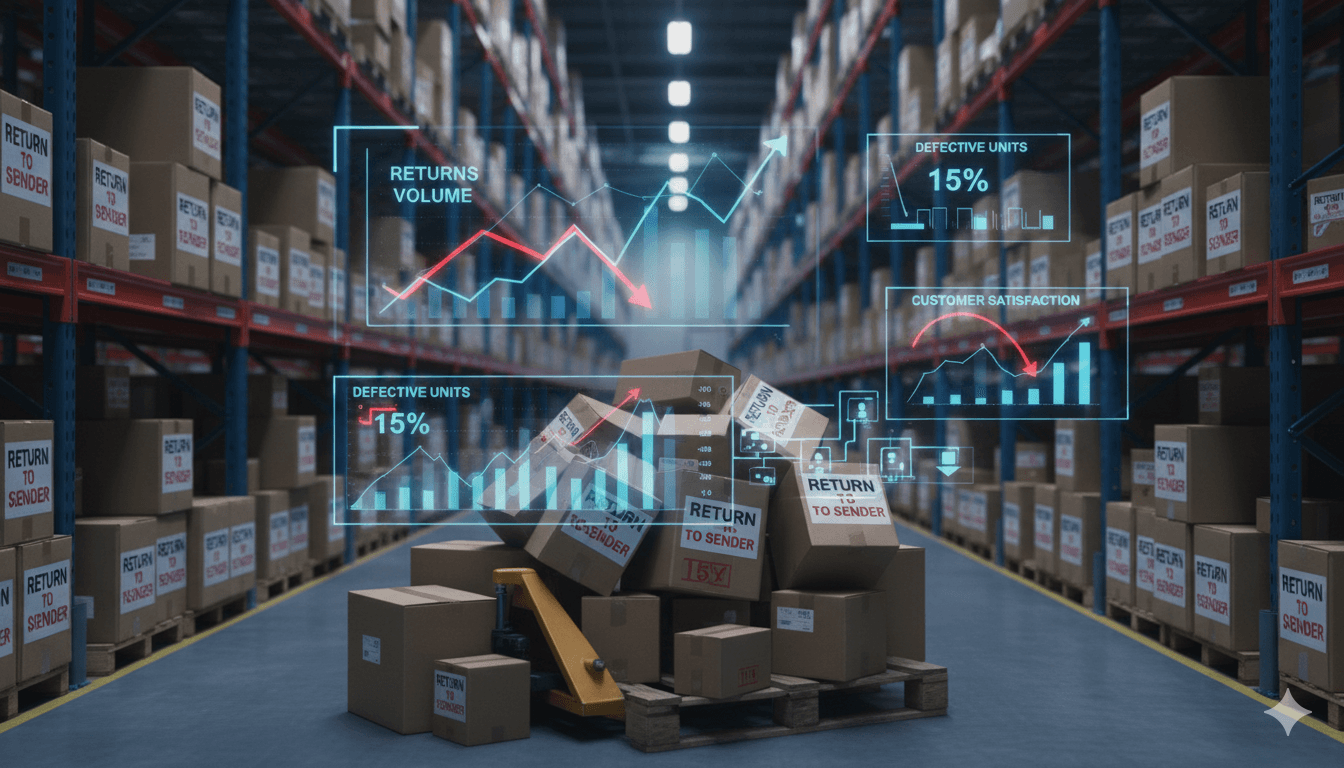
Industry research also shows that 22% of products are returned because they appear different in person than in photos—making accurate, professional photography not just a conversion tool, but a return-prevention strategy.
COMMON MISCONCEPTION:
"Professional photography is too expensive for small brands."
REALITY: The question isn't cost—it's ROI. If professional imagery lifts your PDP conversion rate by even 0.5%, it pays for itself within weeks for most e-commerce brands. The real expense is continuing to lose conversions because your imagery doesn't build trust. Think of it this way: you're already paying for traffic through ads, SEO, or social media. If that traffic isn't converting because your images look amateur, you're wasting far more money than professional photography would cost.
The Three KPIs You Should Be Tracking
If I'm working with a client on product photography, I want them to focus on three measurable outcomes:
1. PDP Conversion Rate (Primary KPI)
Your PDP (Product Detail Page) conversion rate is the percentage of visitors who make a purchase after viewing a specific product page. This is your primary performance indicator.
For product photography, this metric is critical because it answers the question: "Does this imagery reduce purchase hesitation?"
When customers can't touch, smell, or try your product in person, your images need to communicate three things:
- Material truth: texture, color accuracy, scale
- Perceived efficacy: does this product look like it will deliver results?
- Trust: does this brand look professional and legitimate?
Professional photography directly affects all three. For a skincare brand, this might mean showing viscosity, absorption, glow, and packaging details with lighting that reveals rather than hides. For jewelry, it means capturing the weight, sparkle, and craftsmanship that justifies the price point.
Industry benchmark for PDP conversion: 2-4% depending on category and price point. If you're below the midpoint of that range, imagery is often one of the fastest levers you can pull.
2. Engagement Depth
This tracks how deeply visitors interact with your product images. Metrics include:
- Image gallery interaction rate (do they view multiple photos?)
- Average number of images viewed per session
- Zoom usage (are they examining details?)
- Scroll depth (do they reach the "how to use" or ingredients sections?)
Professional photography creates a visual narrative structure: hero shot → detail shots → lifestyle context → texture close-ups. Each image has a job to do. The hero establishes the product. The details answer technical questions. The lifestyle shows aspiration. The texture builds material confidence.
When you have a disciplined visual hierarchy, engagement depth increases because visitors are being guided through a story, not just looking at random product angles.

Close-up detail shots of luxury product showing texture, material quality, and craftsmanship
3. Paid Media Efficiency
Here's where professional photography becomes a force multiplier: better images improve every downstream marketing channel.
Two key metrics to watch:
- CPA (Cost Per Acquisition): What you pay to acquire each customer through paid advertising
- ROAS (Return on Ad Spend): How much revenue you generate for every dollar spent on advertising
If you're already running Instagram, Facebook, or Google Shopping ads, you're spending money to get your product in front of people. If your imagery is inconsistent, low-quality, or doesn't communicate luxury, it's actively sabotaging that investment.
Professional imagery improves click-through rates (more people click your ad), reduces cost per click (platforms reward engaging content), and increases conversion once people land on your site. All of this compounds into better CPA and ROAS.
One of the few upgrades that simultaneously improves your ads, your product pages, your email campaigns, your social media, and your overall brand perception—all from the same asset—is professional product photography.
For more comprehensive product photography statistics and case studies, see this detailed compilation from GrabOn.
The Value Proposition: Competing at the Luxury Tier
Here's how I think about my role as a product photographer:
I help brands compete visually at the luxury tier—even if they're mid-market—because luxury aesthetics aren't just about prestige. They're about conversion performance.
If your imagery doesn't communicate premium, your pricing strategy can't either. And if it doesn't drive measurable engagement and conversions, it's not doing its job as a business tool.
Professional photography isn't a creative expense—it's a conversion system upgrade wrapped in a luxury package.
The brands that understand this don't see photography as a line item on a budget. They see it as revenue infrastructure.
The AI Question: Threat, Tool, or Both?
Let's address the elephant in the room: AI image generation.
I'm not going to pretend it doesn't exist or that it won't change the industry. After the Evoto AI Headshot Generator fiasco at Imaging USA, 2026, it's clear that AI is capable of generating imagery that might have required a full production team just two years ago.
So is AI a threat to professional product photographers? Yes.
Is it also a tool that can make us more valuable to clients? Also yes.
Where AI Helps: Cost Savings and Creative Flexibility
Imagine a luxury skincare brand wants their product photographed on a green marble countertop in a French country villa. The cost of flying there, renting the location, coordinating logistics—it could easily become prohibitive or cause the client to abandon their creative vision entirely.
With AI, we can generate that exact background while I shoot the hero product in a controlled studio environment. We marry the two together, and the client gets their vision at a fraction of the cost.
This is a legitimate, strategic use of AI. I work with AI tools extensively because of my background in data analytics, so I'm fairly current on capabilities and limitations. As a professional photographer in 2026, staying fluent in these technologies is part of the job.
Where Craft Still Matters: Material Problem-Solving and Brand Consistency
But here's what AI can't do yet—and may never do as well as a trained professional:
Material problem-solving. When a client has a definitive look they want, and the product has complex reflective surfaces, precise color requirements, or needs to communicate specific tactile qualities—AI struggles. It can approximate. But approximation isn't good enough when you're trying to build a luxury brand.
Brand consistency across a catalog. AI can generate one-off hero images. But building a coherent visual system across 50 SKUs, ensuring lighting consistency, maintaining brand voice, and creating images that work together as a portfolio? That requires human judgment and strategic oversight.
Strategic consultation. AI doesn't know your competitor's imagery. It doesn't understand your customer's purchase journey. It can't advise you on whether to invest in lifestyle shots versus detail shots based on your current conversion data.
I do.
My Position: AI as a Force Multiplier, Not a Replacement
I see AI as a tool in my professional toolkit—not a replacement for precision, material intelligence, or strategic thinking.
For clients who need speed and volume and are comfortable with "good enough," AI will increasingly serve that need. For clients who are building brands that need to compete at the luxury tier, who understand that material authenticity and visual consistency drive both brand equity and conversion performance—those clients still need a professional who knows how to solve the hard problems.
And I'm betting my business on the belief that there will always be a market for solving hard problems well.
How to Hire & Work With a Professional Photographer
The "Quality Signals" Hiring Guide
If you've made it this far, you're probably considering hiring a professional product photographer. Here's how to evaluate whether someone is the right fit—and how to set the relationship up for success.
What to Look For in a Portfolio
Material variety. Does the photographer show competence across different surfaces—matte, glossy, reflective, translucent? Or do all their images look the same regardless of product type?
Lighting control. Can you see intentional light shaping? Do highlights and shadows serve the product, or do they feel random? Does the lighting feel consistent with a brand voice, or generic?
Consistency. If you're looking at a catalog of images for a single brand, do they feel like they belong together? Or does it look like each product was shot on a different day with a different approach?
Context and storytelling. Do the images just show the product, or do they create a visual narrative? Are there detail shots, lifestyle context, texture close-ups—or just one hero angle repeated?

Professional product photography studio with controlled lighting setup and equipment
Red Flags to Watch For
Over-reliance on post-production. If every image feels heavily composited or "Photoshopped," ask yourself: is this photographer solving problems on set, or in software? There's a place for post-production, but it shouldn't be doing the heavy lifting.
Generic "lifestyle" shots with no brand POV. Stock-looking images of products in vague, aspirational settings don't build your brand—they dilute it. Professional photography should feel specific to *your* product and *your* customer.
No process transparency. A good photographer should be able to explain why they lit something a certain way, not just show you pretty results. If they can't articulate their thinking, they might not have any.
How to Prepare for a Discovery Call
Before we even talk, I want potential clients to fill out a qualifying questionnaire on my website. This helps both of us figure out if we're a good fit before investing time in a call.
If we move forward, here's what I'll want to understand during our discovery conversation:
- Do you have creative direction, or do you need me to help provide it? Some clients come with mood boards, art director briefs, and clear brand guidelines. Others have a vision but need help translating it into executable imagery. Both are fine—I just need to know which we're working with.
- Where will these images be used? One-off ad campaign? Full product launch? Ongoing e-commerce catalog? Website redesign? The use case determines the scope and approach.
- What do you want these images to *do* for your brand? Are we driving conversions? Building brand equity? Launching into a new market? Competing with a specific competitor? The more specific you can be about goals, the better I can tailor the work.
- What's the scale of your company and your visual needs? I'm happy to work with small brands selling artisan goods who just need clean, well-lit images for their Shopify store. I'm also equipped to work with mid-tier luxury brands doing full seasonal launches. But the approach for each is different, and I want to make sure we're aligned on expectations.
When I Might Redirect You (And Why That's Okay)
Here's something most photographers won't tell you: sometimes, I'm not the right fit for your project.
If you're a small seller with straightforward products—let's say kitchen cabinet hardware—and your primary need is clean, functional imagery for an Etsy shop or Amazon listing, I might suggest that an iPhone, good natural light, and some AI background cleanup could serve you just as well at a fraction of the cost.
I'm not trying to turn away business. But I also know that some projects don't require the level of craft, problem-solving, or strategic consultation I bring. And I'd rather build long-term relationships with clients who genuinely need what I offer than take every job that comes my way.
If you're a good fit, you'll know because:
- Your product has complex material qualities that need careful lighting
- You're competing in a category where visual quality directly impacts perceived value
- You need imagery that works across multiple channels and serves both brand-building and conversion goals
- You value the strategic consultation and problem-solving as much as the final images
Evaluating the Brief: What Makes a Good One
If you do have an art director or marketing team, here's what a professional-grade creative brief should include:
- Visual reference or mood board with clear aesthetic direction
- Brand voice and guidelines (tone, color palette, visual do's and don'ts)
- Specific deliverable specs: sizing, file formats, where copy will overlay, how images will be cropped
- Clear use case: Is this for social? Paid ads? Product detail pages? Print?
A good brief leaves little room for interpretation because the client knows exactly what they need and why.
A bad brief looks like an email that says: "We need product shots for our website and social media. Shoot it however you think works best."
That's not a brief—that's outsourcing creative strategy to me. Which is fine, but it's a different kind of project with a different scope and cost structure.
The Path Forward: Building a Visual System, Not Just Ordering Photos
Here's the final reframe I want to leave you with:
You're not buying photos. You're building visual infrastructure.
Professional product photography isn't a one-time deliverable. It's a system. A visual language that runs through your hero images, your detail shots, your lifestyle context, your texture close-ups. It creates subconscious trust because customers see consistency. They see a brand that knows what it's doing.
Think of it like this: every time a customer sees one of your images—whether it's in an Instagram ad, on your product page, in an email, or on a Amazon listing—they're making a snap judgment about your brand's professionalism and value. If your imagery is inconsistent, low-quality, or poorly lit, you're losing trust in micro-moments across thousands of interactions.
If your imagery is cohesive, high-quality, and strategically aligned with your brand positioning, you're *building* trust in those same moments.
Start Small, Then Scale
If you're not ready to invest in a full catalog refresh, that's okay. Start with one SKU. Replace the images on one product page, run it for four weeks, and compare the conversion rate to your previous baseline.
If it works—if engagement increases, if conversions improve, if your paid ads perform better—then scale. Add more products. Build out the full visual system.
If it doesn't move the needle, stop. Reevaluate. Maybe the product itself needs work. Maybe the pricing is off. Maybe the market isn't there.
But at least you'll know. And you'll have tested it in the lowest-risk, highest-clarity way possible: one product, one channel, one metric.
The Standard I Hold Myself To
Here's my promise to every client I work with:
If the images I create don't improve your conversion rate, engagement depth, or paid media efficiency, I didn't do my job as a professional product photographer.
Provided, of course, that the product is something people actually want to buy.
But if the product is solid, the market is there, and the imagery still doesn't perform—that's on me. Because professional photography isn't just about making things look beautiful. It's about making your business work better.
That's the standard. And that's the difference between a photographer and a strategic partner.
Final Thoughts
If you've read this far, you're probably past the "good enough" stage. You're building something serious. You're competing at a level where details matter, where perception drives revenue, and where imagery isn't decoration—it's infrastructure.
The question isn't whether you need professional product photography. The question is whether you're ready to treat it as the business investment it actually is.
If you are, let's talk. If you're not sure yet, bookmark this guide and come back to it when the gap between where you are and where you need to be becomes impossible to ignore.
Either way, I hope this has given you a clearer picture of what professional product photography actually delivers—and why, in 2026, DIY just isn't enough anymore.
Ready to see if we're a good fit?
Want to see examples of material problem-solving in action?
Curious about the data behind these claims?
About the Author: Kevin Boller is a product photographer specializing in luxury goods and high-end e-commerce imagery. With a 20-year background in data analytics, he brings a unique perspective to product photography—combining technical craft with measurable business outcomes. Based in Southwest Florida, but working world wide, he works with brands that compete at the luxury tier and need imagery that drives both brand equity and conversion performance.